Joe Kent Resigns as U.S. Counterterrorism Chief Over Iran War
Joe Kent resigns as U.S. counterterrorism chief, protesting Trump’s Iran war. His departure highlights dissent and questions about America’s Middle East strategy.
Loading...

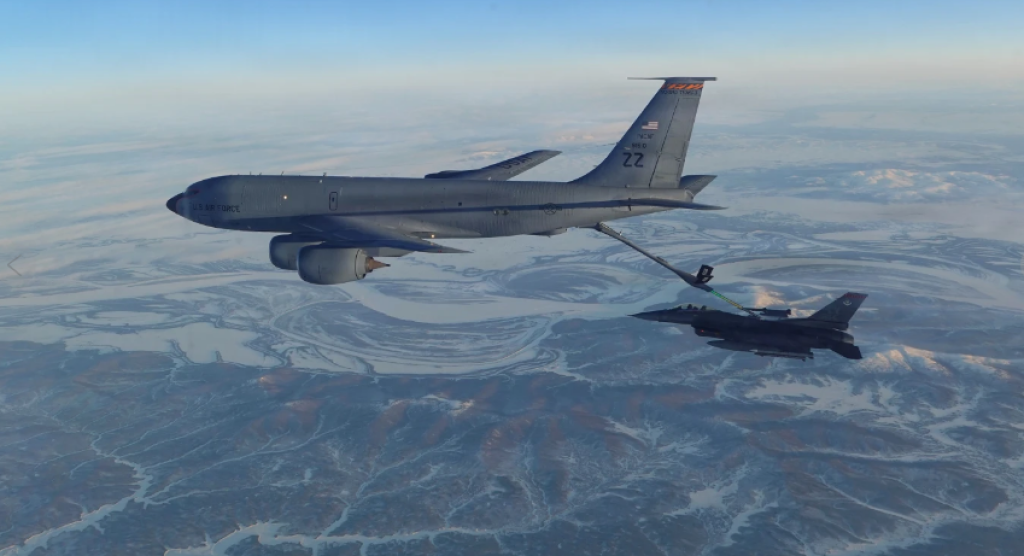
A U.S. KC‑135 Stratotanker crashed in Iraq, killing six crew members. The incident underscores risks of aging aircraft amid escalating war with Iran.
The U.S. military confirmed on Friday that six American service members were killed when a KC‑135 Stratotanker crashed in western Iraq near the Jordanian border. The aerial refueling aircraft was part of Operation Epic Fury, the ongoing campaign against Iran. A second KC‑135 involved in the same incident managed to land safely in Israel.
Table of contents [Show]
According to Iraqi intelligence sources, the tanker went down near Turaibil after reporting an emergency. Flight tracking data showed another KC‑135 declaring distress before landing in Tel Aviv. U.S. Central Command stated that neither hostile nor friendly fire was responsible, though the precise cause remains under investigation.
The crash brings the total number of American fatalities in the conflict to thirteen. It is the fourth aircraft loss publicly acknowledged since the war began, following last week’s friendly‑fire incident in which Kuwaiti defenses mistakenly shot down three U.S. F‑15E Strike Eagles.
The KC‑135 Stratotanker has been a backbone of U.S. air operations for more than six decades. Based on the Boeing 707 design, the aircraft enables fighters and bombers to extend their range by refueling midair. Analysts note that the tankers are also used for surveillance and medical evacuation missions.
Each KC‑135 typically carries a crew of three — pilot, co‑pilot, and boom operator — with additional personnel for aeromedical missions. The boom operator, positioned in the rear of the aircraft, lowers a refueling boom to connect with other aircraft, often while lying face‑down to guide the process. Some tankers are equipped with wing pods to refuel multiple aircraft simultaneously.
The KC‑135 fleet, last manufactured in the 1960s, has long raised questions about durability. While upgrades have kept the aircraft flying, the transition to the newer KC‑46A Pegasus has been slower than expected. The U.S. Air Force still operates 376 KC‑135s, spread across active duty, Air National Guard, and Reserve units.
Security analyst Yang Uk of the Asan Institute in South Korea noted that tankers usually operate far from combat zones, making it rare for them to be destroyed by enemy fire. He warned that as the Iran war drags on, refueling missions will become even more critical, with American aircraft flying longer distances to pursue Iranian forces deeper inside the country.
The crash comes amid escalating violence across the region. Iran’s new supreme leader, Mojtaba Khamenei, vowed revenge for Iranian casualties, while U.S. and Israeli strikes continued to pound Tehran and other cities. Fars news agency reported explosions shaking homes in the capital.
Iran launched fresh missile attacks on Israel overnight, injuring two people in the north. Israel, meanwhile, intensified its offensive against Hezbollah in Lebanon, warning it could seize territory if attacks did not stop. Hundreds have been killed and nearly a million displaced in Lebanon as fighting spreads.
U.S. officials confirmed that more than 150 American service members have been injured since the war began. Iran’s UN envoy claims over 1,300 Iranians have died. Defense Secretary Pete Hegseth and President Donald Trump have both acknowledged that more American lives will likely be lost before the conflict ends.
The KC‑135 crash highlights both the human toll and the logistical strain of the U.S. campaign in Iran. As investigations continue, the incident underscores the risks of operating aging aircraft in a high‑intensity conflict. With refueling tankers essential to sustaining long‑range missions, their vulnerability raises new questions about the durability of America’s air power in a war that shows no signs of abating.
Joe Kent resigns as U.S. counterterrorism chief, protesting Trump’s Iran war. His departure highlights dissent and questions about America’s Middle East strategy.
Tornadoes devastate Michigan and Oklahoma, killing at least four, injuring dozens, and prompting emergency declarations as recovery efforts continue.