OpenAI Buys TBPN, a Popular Daily Tech Talk Show
OpenAI has acquired TBPN, an online tech talk show that has amassed a devoted Silicon Valley audience through interviews with business CEOs, as it competes with Anthropic for enterprise clients.
Loading...

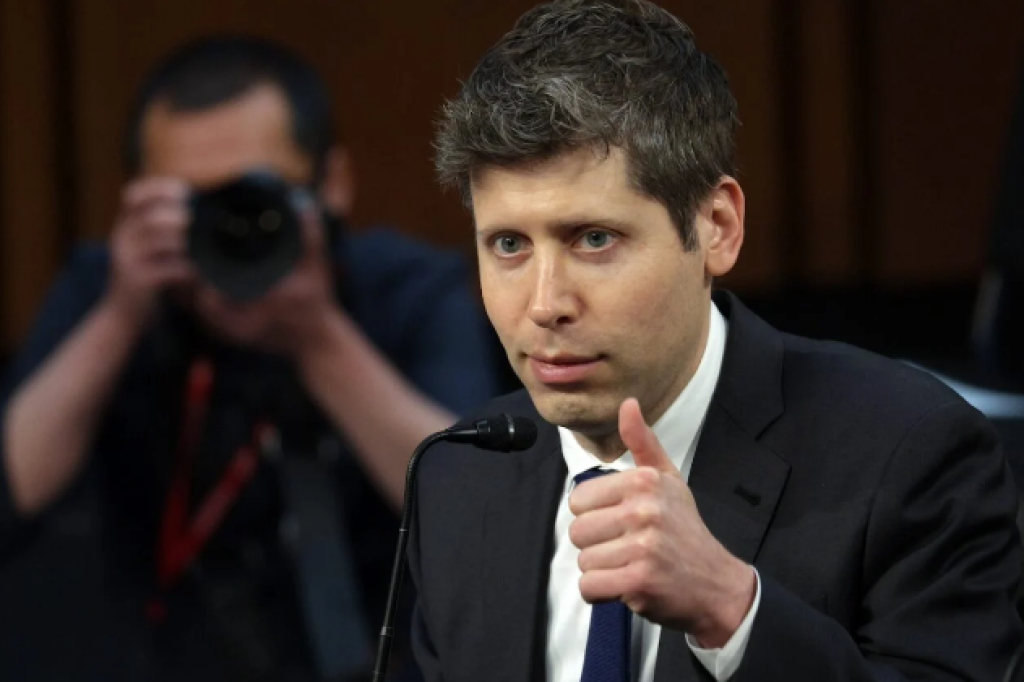
OpenAI secures a defense pact with the Department of War, sparking rivalry with Anthropic over AI ethics, surveillance, and autonomous weapons.
On Friday night, Sam Altman, CEO of OpenAI, stunned the tech and defense worlds with a post on X announcing that his company had “reached an agreement with the Department of War to deploy our models in their classified network.” The timing was shocking, not only because of the secrecy surrounding military AI but also because it came amid escalating tensions between OpenAI’s chief rival, Anthropic, and the Pentagon.
Altman has long been seen as a poster boy for artificial intelligence, but this announcement positions him at the center of a debate about AI’s role in warfare, surveillance, and democratic values.
Artificial intelligence has increasingly become a tool of interest for defense agencies worldwide. From predictive analytics to autonomous systems, governments are exploring how AI can reshape military operations. The renaming of the Pentagon to the Department of War under the Trump administration underscores a shift toward more aggressive branding of defense policy.
For AI companies, this presents both opportunity and risk. Contracts with the DoW promise lucrative funding and influence, but they also raise ethical questions about surveillance, autonomy, and human responsibility in warfare.
Table of contents [Show]
Anthropic, founded by former OpenAI executives including Dario Amodei, has positioned itself as the ethical counterweight to Altman’s company. Amodei issued a lengthy statement on Thursday, stressing that “in a narrow set of cases, we believe AI can undermine, rather than defend, democratic values.”
Anthropic drew “red lines” against the use of its models for fully autonomous weapons and mass domestic surveillance. The Pentagon, however, deemed these restrictions intolerable. Hours before Altman’s announcement, Anthropic was classified as a “supply‑chain risk to national security,” effectively blacklisting the company from any commercial activity with defense contractors.
Secretary of War Pete Hegseth declared that no business collaborating with the Pentagon “may conduct any commercial activity with Anthropic.” The move was a severe blow to Anthropic’s ambitions and a warning to other AI firms about the consequences of defying government demands.
Altman’s announcement emphasized that OpenAI’s defense contract includes safeguards addressing the very issues Anthropic raised. He outlined two key principles:
Altman insisted that these values are not only upheld by OpenAI but also incorporated into law and policy by the Department of War. He further revealed that OpenAI engineers will be deployed alongside Pentagon teams to ensure the safe integration of AI models.
This hands‑on approach reflects a deeper level of cooperation than most tech companies have previously accepted. Altman also pledged to build technical safeguards to ensure models behave predictably, aligning with the DoW’s requirements.
The rivalry between OpenAI and Anthropic is more than corporate competition—it’s personal. Anthropic was founded as a spin‑off from OpenAI, with Amodei and his colleagues arguing that OpenAI had failed to uphold safety and ethical norms.
The tension has spilled into public view. Anthropic aired Super Bowl commercials disparaging OpenAI, and earlier this month, Altman and Amodei refused to shake hands during a photo opportunity for AI leaders in India. These incidents highlight the bitterness between the two CEOs and the symbolic clash of philosophies: Altman’s pragmatism versus Amodei’s principled resistance
| Issue | OpenAI (Sam Altman) | Anthropic (Dario Amodei) |
|---|---|---|
| Military Cooperation | Agreement with DoW, deployment in classified networks | Blacklisted after refusing unrestricted cooperation |
| Autonomous Weapons | Human responsibility required | Red line: no fully autonomous weapons |
| Domestic Surveillance | Explicit prohibition in contract | Red line: no mass surveillance |
| Government Relations | Seeks de‑escalation and agreements | Challenges supply‑chain risk designation in court |
| Public Rivalry | Pragmatic, cooperative stance | Ethical resistance, public criticism |
The confrontation between OpenAI and Anthropic raises broader questions about AI governance. If the Department of War enforces compliance by blacklisting dissenting companies, the precedent could reshape the industry. Smaller startups may feel pressured to align with government demands, while larger firms may negotiate safeguards similar to OpenAI’s.
Globally, the debate mirrors ongoing discussions at the United Nations and in Europe about regulating autonomous weapons and surveillance technologies. China, meanwhile, has pursued aggressive AI integration into defense, further intensifying the geopolitical stakes.
Altman’s contract may give OpenAI a competitive edge, but it also ties the company’s reputation to military applications. Whether the safeguards prove effective remains to be seen. Critics argue that once AI systems are embedded in defense networks, oversight becomes difficult.
Anthropic’s resistance, though costly, may resonate with advocates of ethical AI. The company’s legal challenge to its blacklisting could spark debates about corporate rights, government overreach, and the balance between national security and democratic values.
In theory, Anthropic’s loss is Altman’s gain. Yet the rivalry between the two companies reflects a deeper struggle over the soul of artificial intelligence. Will AI serve as a tool of unchecked surveillance and autonomous warfare, or can safeguards ensure human responsibility and democratic values?
For now, OpenAI has secured its place inside the Department of War’s classified networks, while Anthropic fights for its principles in court. The outcome will shape not only the future of these two companies but also the trajectory of AI in global defense.

OpenAI has acquired TBPN, an online tech talk show that has amassed a devoted Silicon Valley audience through interviews with business CEOs, as it competes with Anthropic for enterprise clients.