The Middle East conflict intensified on Tuesday as Iran and its proxies launched fresh attacks against U.S. and Israeli targets. Drones struck the U.S. embassy in Riyadh, Hezbollah escalated rocket and drone strikes on northern Israel, and President Donald Trump declared that negotiations with Tehran were “too late.” The violence has spread across the region, leaving hundreds dead and disrupting global energy markets.
Embassy Attacks and Regional Fallout
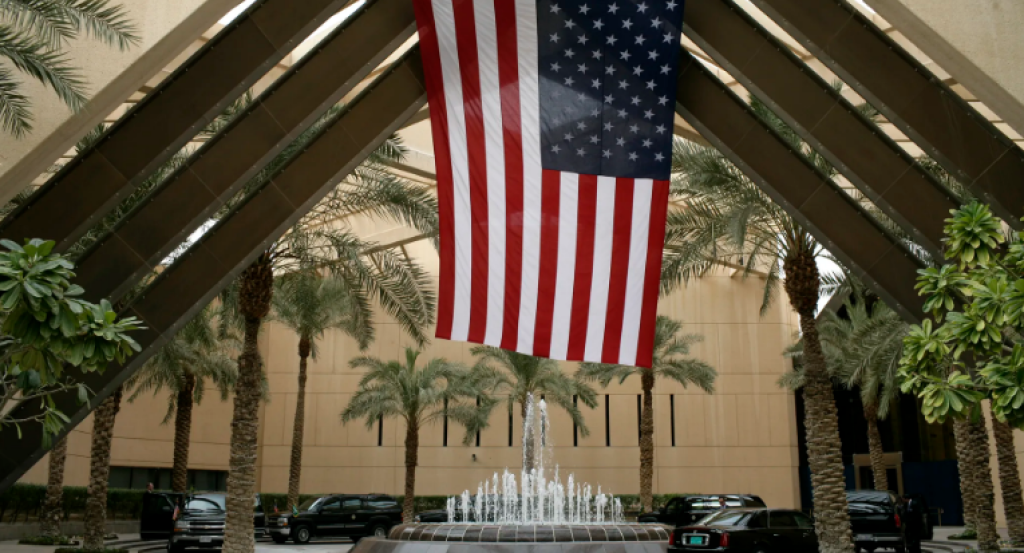
Iranian drones hit the U.S. embassy in Riyadh, sparking a fire and prompting evacuation warnings. The strike followed a similar attack on the U.S. embassy in Kuwait, underscoring Tehran’s expanding reach. American bases and facilities across the Gulf have also come under fire, forcing diplomats to advise citizens to leave vulnerable areas. These attacks highlight Iran’s strategy of stretching U.S. defenses across multiple fronts while signaling its willingness to escalate beyond Israel.
Trump’s Response
On his Truth Social platform, Trump dismissed Tehran’s alleged attempt to resume talks. “They have lost their leadership, Air Force, Navy, and air defense. They wish to converse. I said ‘Too Late,’” he wrote. The president insisted that the United States was prepared to sustain operations “far longer” than a four‑to‑five‑week conflict, signaling a protracted campaign. His remarks came just hours after the Riyadh embassy strike, reinforcing Washington’s determination to press ahead despite mounting risks.
Israeli Escalation
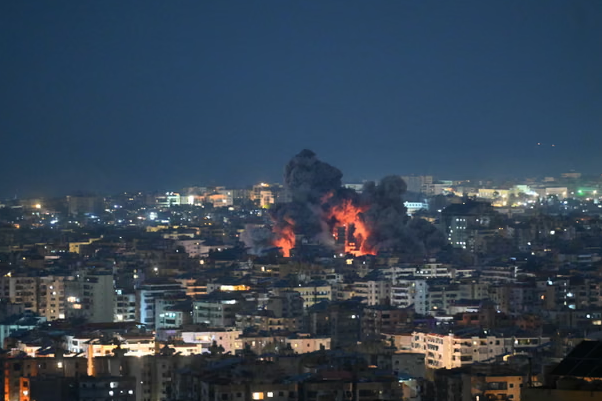
Israel has intensified its campaign in Lebanon and Iran. Strikes south of the Litani River have devastated towns, while evacuation orders have turned Beirut’s southern suburbs into ghost towns. In Tehran, residents near Karaj airport were told to evacuate ahead of what Israel described as an “extensive” wave of airstrikes. Hezbollah’s infrastructure has been targeted, including the al‑Qard al‑Hassan bank, al‑Manar television, and political bureau facilities. Israel claims to have killed senior Hezbollah figures, including intelligence commander Hussein Makled, weakening the group’s operational capacity.
Human Toll
The civilian cost of the conflict is mounting. Between 787 and 1,500 people are believed to have died in Iran, including 165 children in a strike on a primary school. In Israel, eleven citizens were killed when missiles evaded the country’s advanced defense systems. Lebanon has reported 52 fatalities and 29,000 displaced individuals, while the United States acknowledged six troops killed in Kuwait. The scale of casualties underscores the humanitarian crisis unfolding across the region.
Energy Shock
Iran’s attacks have paralyzed Gulf energy infrastructure. Saudi Arabia shut down operations at its Ras Tanura refinery, while Qatar halted production at its largest liquefied natural gas plant. Most significantly, Iran closed the Strait of Hormuz, a global chokepoint for oil and gas shipments, threatening to attack any vessels attempting passage. Brigadier General Ebrahim Jabbari of the Revolutionary Guard warned, “Avoid visiting this area.” The closure has sent energy prices soaring, creating one of the most severe global energy shocks in decades.
U.S. Strategy and Debate
Inside Washington, debate continues over the scope of the campaign. Defense Secretary Pete Hegseth floated the possibility of deploying U.S. ground troops in Iran, though analysts cautioned that the country’s mountainous terrain would make such operations costly and difficult. Secretary of State Marco Rubio declared that “the hardest hits are yet to come,” while officials insisted the campaign was proceeding more smoothly than anticipated. Trump himself has alternated between framing the mission as an effort to halt Iran’s nuclear and missile programs and as a push for regime change. Iran, for its part, continues to deny pursuing nuclear weapons.
Hezbollah’s Role and Lebanon’s Neutrality
Hezbollah has persisted in rocket and drone attacks on Israel, striking facilities in the Golan Heights and airbases in northern Israel. Yet the group faces growing criticism at home. Lebanon’s government, in an unprecedented move, banned Hezbollah’s military operations and ordered the judiciary to detain those launching rockets. The decision reflects mounting frustration with Hezbollah’s role in dragging Lebanon into a war despite the state’s declared neutrality.
The conflict has spiraled into a multi‑front war involving Iran, Hezbollah, Israel, and U.S. forces. Trump’s “Too Late” declaration signals a long campaign, while Iran’s closure of the Strait of Hormuz threatens global energy markets. With casualties mounting and Lebanon’s government breaking ranks with Hezbollah, the region faces a volatile mix of military escalation, humanitarian crisis, and geopolitical uncertainty.
Beirut continues to crack down, Hezbollah could face internal isolation, reshaping Lebanon’s political balance.
What’s Next: Scenarios for the Region
The conflict is entering a volatile phase, and several possible trajectories are emerging:
1. Succession Struggles in Iran
With Supreme Leader Khamenei gone, Iran faces a leadership vacuum. Rival clerical factions and the Revolutionary Guard may compete for control, creating instability that could either weaken or radicalize Tehran’s response.
2. Proxy Retaliation Across the Middle East
Iran’s allies — Hezbollah in Lebanon, militias in Iraq and Syria, and Houthis in Yemen — may intensify attacks on U.S. and Israeli targets. This risks dragging multiple countries deeper into the conflict and widening the war’s footprint.
3. Global Energy Fallout
The closure of the Strait of Hormuz and strikes on Gulf energy infrastructure have already rattled markets. If prolonged, the disruption could trigger a global energy crisis, forcing international powers to intervene diplomatically or militarily.
4. U.S. Strategic Choices
Washington must decide whether to escalate further — potentially with ground troops — or limit operations to air and naval strikes. Trump’s rhetoric suggests a long campaign, but domestic and allied pressures may push for restraint.
5. Lebanon’s Internal Divide
Hezbollah’s defiance of Lebanon’s neutrality has already provoked government backlash. If Beirut continues to crack down, Hezbollah could face internal isolation, reshaping Lebanon’s political balance.
The next phase of the U.S.–Iran conflict will hinge on whether Tehran’s fractured leadership can rally, how far proxies escalate, and whether global powers step in to stabilize energy markets. For now, Trump’s “Too Late” warning signals a drawn‑out confrontation, with the Middle East bracing for even harder hits in the weeks ahead.