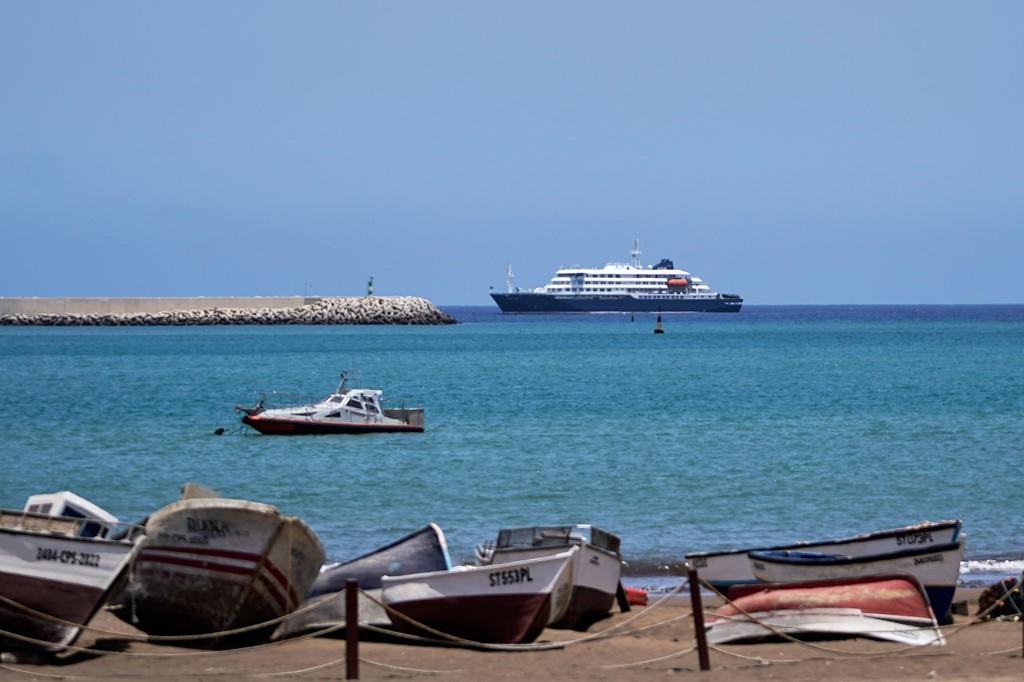
A luxury cruise ship anchored off Cape Verde has become the focus of international health authorities after a deadly outbreak of hantavirus left three passengers dead and several others seriously ill. The World Health Organisation (WHO) confirmed two laboratory cases and five suspected infections linked to the vessel, MV Hondius, operated by Oceanwide Expeditions. Among the victims is a British national who remains in intensive care in Johannesburg, while two crew members are reported to require urgent medical attention.
The incident has shocked the cruise industry and reignited debate about how prepared global health systems are to respond to rare but deadly viral outbreaks in confined environments.
The Outbreak Unfolds
The first signs of trouble emerged in mid‑April when a 69‑year‑old Dutch passenger died on board. His body, along with his wife, was disembarked on St Helena on April 24. Days later, his wife also fell ill during her return journey and died, with tests confirming hantavirus infection. A German national died on May 2, bringing the death toll to three.
WHO officials reported that seven cases have been identified in total: two confirmed, five suspected. These include one critically ill British passenger evacuated to South Africa, two crew members with acute respiratory symptoms, and another individual whose condition has not been disclosed.
Medical teams boarded the ship to evacuate the most serious cases, while passengers were told they could not disembark until further assessments were completed.
WHO’s Response
The WHO has taken the unusual step of issuing detailed updates, underscoring the seriousness of the outbreak. Officials confirmed that medics boarded the MV Hondius to evacuate two passengers and provide care for others.
While hantavirus is typically spread through contact with rodent urine, feces, or saliva, WHO emphasized that there are no rats on board. Investigators believe some passengers may have been infected before joining the cruise, though Reuters reported that limited human‑to‑human transmission among close contacts on the vessel cannot be ruled out.
WHO stressed that the risk to the wider public remains low, but the outbreak highlights vulnerabilities in confined travel environments where infections can spread rapidly.
Victims and Survivors
The human toll of the outbreak is sobering.
- A 69‑year‑old Dutch man died on April 11 while on board.
- His wife, also 69, became ill after disembarking and died on April 27.
- A German national died on May 2 while still on the ship.
Meanwhile, a British passenger was evacuated to Johannesburg on April 27 and remains in critical but stable condition. Two crew members — one British, one Dutch — continue to suffer acute respiratory symptoms. Another passenger has been identified as symptomatic, though details remain scarce.
Oceanwide Expeditions confirmed that a variant of hantavirus was present in the Dutch woman who died after leaving the ship.
What Is Hantavirus?
Hantavirus refers to a family of viruses carried primarily by rodents. Infections can lead to two severe illnesses: Hantavirus Pulmonary Syndrome (HPS), which attacks the lungs, and Hemorrhagic Fever with Renal Syndrome (HFRS), which affects the kidneys.
Symptoms often begin with fever, muscle aches, and fatigue, progressing to coughing, shortness of breath, or kidney failure. There is no specific treatment, and supportive care is the only option. Mortality rates vary but can be high, especially in pulmonary cases.
The virus made headlines in 2025 when actor Gene Hackman and his wife died from hantavirus in New Mexico, underscoring its deadly potential even outside outbreak settings.
Cruise Industry Under Scrutiny
The MV Hondius outbreak has raised difficult questions for the cruise industry, which has long struggled with infectious disease management. From norovirus outbreaks to COVID‑19 clusters, cruise ships have often been criticized as “floating petri dishes.”
Oceanwide Expeditions said it is cooperating fully with WHO and local authorities, but passengers have expressed frustration at being confined on board. A travel blogger posted a tearful video describing the fear and uncertainty among guests, many of whom are elderly.
The company faces scrutiny over whether health checks before boarding were sufficient and whether the ship’s medical facilities were equipped to handle such a crisis.
Scientific Debate: Human‑to‑Human Transmission
Traditionally, hantavirus has been considered a zoonotic disease, spread only through rodent exposure. However, the outbreak on MV Hondius has reignited debate about whether certain strains can spread between humans.
WHO acknowledged that limited transmission among close contacts on the ship may have occurred. If confirmed, this would mark a significant shift in understanding the virus and could have implications for global health protocols.
Global Health Implications
The outbreak comes at a time when the world is still grappling with lessons from the COVID‑19 pandemic. Experts say the Hondius incident underscores several key points:
- Preparedness: Even rare diseases can cause deadly outbreaks in confined travel environments.
- Surveillance: Cruise ships and airlines must strengthen health monitoring and reporting systems.
- Communication: Transparent updates from WHO and operators are critical to maintaining public trust.
- Research: More studies are needed to understand hantavirus transmission dynamics.
Geopolitical Dimension
The ship’s route — from St Helena to Cape Verde and onward to the Canary Islands — has drawn in multiple jurisdictions. Coordination between African health authorities, European governments, and WHO has been essential.
South Africa’s role in treating the critically ill British patient highlights the importance of regional medical hubs in responding to international health emergencies.
Historical Context
Hantavirus outbreaks have been documented in rural areas of the Americas, Asia, and Europe, often linked to rodent infestations. What makes the MV Hondius case unusual is its setting: a modern cruise ship with no evidence of rodents on board.
This anomaly raises questions about how passengers contracted the virus and whether new variants are emerging that behave differently from traditional strains.
The MV Hondius outbreak is a stark reminder that rare viruses can still pose deadly threats in unexpected places. With three lives lost, one passenger fighting for survival, and several others ill, the incident has shaken confidence in cruise travel and highlighted gaps in global health preparedness.
As WHO continues its investigation, the world will be watching closely for answers about how the virus spread, whether human‑to‑human transmission occurred, and what lessons can be drawn for future outbreaks.