Burundi’s President Évariste Ndayishimiye Secures Ruling Party Nomination for 2027 Election
Burundi’s ruling CNDD‑FDD nominates President Évariste Ndayishimiye for the 2027 election, sparking debate over governance, rights, and the nation’s future.
Loading...

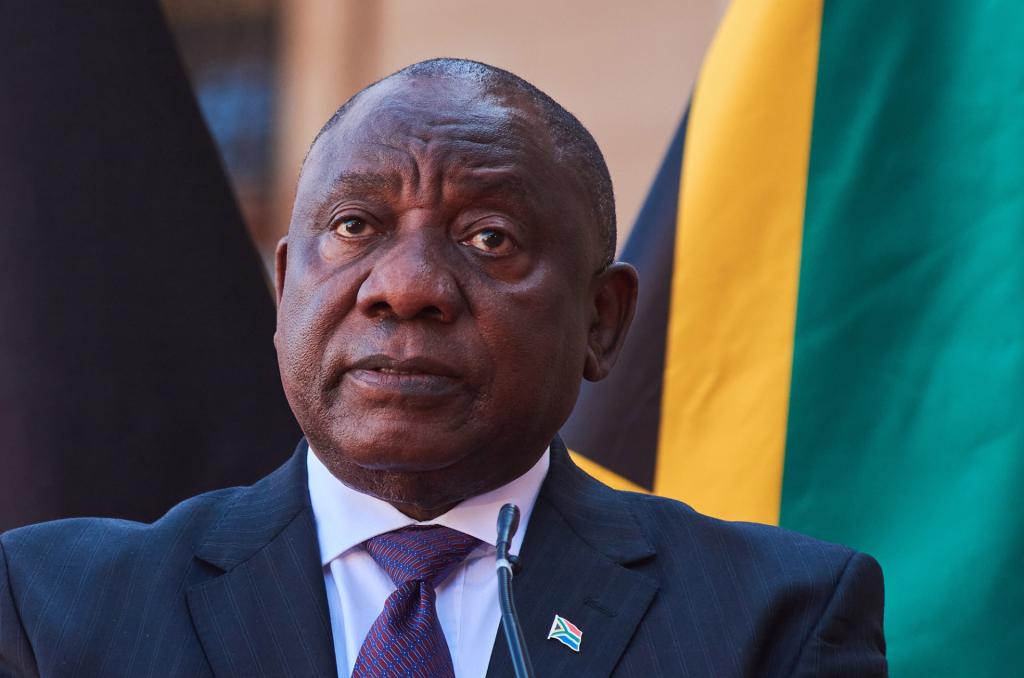
South Africa’s ConCourt orders Ramaphosa’s Phala Phala report back to Parliament, reopening impeachment and reshaping accountability in politics.
South Africa’s Constitutional Court has reopened the impeachment process against President Cyril Ramaphosa, ruling that Parliament acted unconstitutionally when it blocked the Section 89 Independent Panel’s findings in 2022. The decision has reignited the Phala Phala scandal, a saga that began with a burglary at Ramaphosa’s Limpopo farm and has since become a test of South Africa’s constitutional order.
The ruling is not just about one President or one scandal. It is about whether Parliament can act as a true watchdog over the executive, whether coalition politics will prioritize accountability, and whether South Africa’s democracy can withstand the corrosive effects of corruption and secrecy.
Table of contents [Show]
The scandal traces back to February 2020, when burglars allegedly stole large sums of undeclared foreign currency hidden in furniture at Ramaphosa’s Phala Phala game farm. The incident remained secret until 2022, when former intelligence chief Arthur Fraser filed a criminal complaint. He accused Ramaphosa of failing to declare the money, covering up the theft, and authorizing a covert recovery operation outside the law.
The allegations struck at the heart of constitutional governance. They raised questions about whether the President had violated anti‑corruption laws, abused his office, and undermined transparency. For many South Africans, the scandal symbolized the persistence of elite impunity in a country still struggling with poverty, unemployment, and inequality.
In November 2022, a panel chaired by former Chief Justice Sandile Ngcobo concluded there was prima facie evidence of misconduct. The findings suggested Ramaphosa may have breached his oath of office and violated anti‑corruption statutes.
But in December 2022, the ANC majority in Parliament voted to reject the report, shielding Ramaphosa from impeachment. That decision damaged Parliament’s credibility, reinforcing perceptions that majoritarianism was being used to protect the powerful rather than uphold the Constitution.
The Court’s May 2026 judgment declared that Parliament’s actions were unconstitutional. By invalidating Rule 129(i)(b), which allowed the National Assembly to dismiss the panel’s findings, the Court ordered the report to be referred to an impeachment committee.
The ruling is historic because it reasserts a simple but profound principle: no one, not even the President, stands above the Constitution. It also sends a message that parliamentary procedure cannot be manipulated to shield executive misconduct.
Ramaphosa’s office responded with restraint, emphasizing respect for the judiciary and the rule of law. Spokesperson Vincent Magwenya said the President had consistently cooperated with inquiries and reaffirmed that “no person is above the law.”
Parliament promised to study the judgment carefully, acknowledging its implications for legislative procedures.
ActionSA hailed the ruling as a victory for accountability, noting that the ANC no longer holds a majority in Parliament. RISE Mzansi leader Songezo Zibi framed the decision as a reminder that majoritarianism cannot override constitutional principles. The ATM stressed that the ruling was not a finding of guilt but a reaffirmation of constitutional accountability.
AZAPO went further, calling Parliament’s 2022 vote a betrayal of its mandate. The Afrika Mayibuye Movement demanded Ramaphosa’s suspension pending inquiry, while COSATU urged restraint and respect for due process.
The ruling comes at a time when South Africa’s political landscape is more contested than ever. The ANC’s loss of its majority in the 2024 elections forced the creation of a Government of National Unity (GNU). This means impeachment proceedings will unfold in a Parliament where coalition partners hold significant sway.
For Ramaphosa, the stakes are high. If coalition partners side with opposition parties, he could face suspension or removal. If they shield him, public trust in the GNU could erode. Either way, the ruling ensures that the Phala Phala matter will be tested transparently, with consequences for both the President and the broader political system.
The ruling recalls the Constitutional Court’s 2016 judgment against former President Jacob Zuma over the Nkandla scandal. That decision weakened Zuma’s legitimacy and set the stage for his eventual resignation.
Similarly, the Phala Phala ruling could mark a turning point for Ramaphosa. It forces Parliament to confront its duty as a guardian of accountability and tests whether South Africa’s democracy can resist the temptation of partisan protection.
Beyond Ramaphosa, the ruling has wider implications:
The Constitutional Court’s decision to reopen the Phala Phala impeachment process is a watershed moment. It revives allegations that have haunted Ramaphosa since 2022 and forces Parliament to act transparently.
Whether the process leads to suspension, impeachment, or exoneration, the ruling ensures that the matter will be tested in the open. More importantly, it reaffirms the principle that South Africa’s democracy rests on accountability, not majoritarianism.
As Songezo Zibi said:
“Parliament now has a second chance to do the right thing. It must not squander it.”
Burundi’s ruling CNDD‑FDD nominates President Évariste Ndayishimiye for the 2027 election, sparking debate over governance, rights, and the nation’s future.
South Africa withdraws its draft AI policy after fake, AI‑generated citations are discovered, raising concerns about oversight, credibility, and future governance.
Julius Malema sentenced to five years for firearm offenses. His appeal could reshape South Africa’s politics, justice system, and democratic institutions.