Burundi’s President Évariste Ndayishimiye Secures Ruling Party Nomination for 2027 Election
Burundi’s ruling CNDD‑FDD nominates President Évariste Ndayishimiye for the 2027 election, sparking debate over governance, rights, and the nation’s future.
Loading...

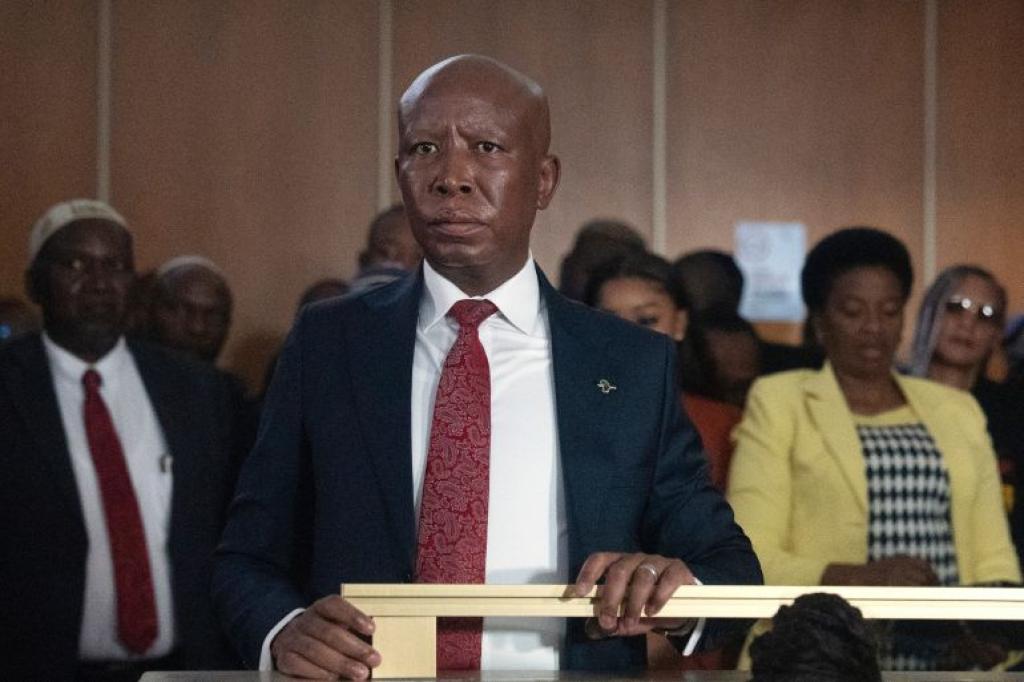
Julius Malema sentenced to five years for firearm offenses. His appeal could reshape South Africa’s politics, justice system, and democratic institutions.
South Africa’s political stage has once again been shaken by Julius Malema, leader of the Economic Freedom Fighters (EFF). His sentencing to five years in prison for firearm‑related offenses has sparked fierce debate about justice, accountability, and the future of South African politics. While Malema remains free pending appeal, the case has already reshaped political discourse and raised questions about the resilience of democratic institutions.
Table of contents [Show]
The controversy dates back to 2018, when Malema was filmed firing a semi‑automatic rifle at a rally in Mdantsane, Eastern Cape. Prosecutors argued that his actions endangered public safety and violated firearm laws. Malema’s defense claimed the gun was a toy and the shots were celebratory. After years of legal wrangling, Magistrate Twanet Olivier handed down a five‑year sentence in April 2026.
Malema was convicted of unlawful possession and discharge of a firearm, reckless endangerment, and related charges. Importantly, the court granted him leave to appeal the sentence but not the conviction — meaning he is legally guilty, but the punishment could be reduced, suspended, or converted into fines or community service.
Experts note the unusual nature of granting leave to appeal only the sentence. This suggests the court recognized mitigating factors but remained firm on the guilty verdict.
The High Court will now review whether the punishment aligns with precedent and proportionality in South African law.
The ruling has divided the political landscape:
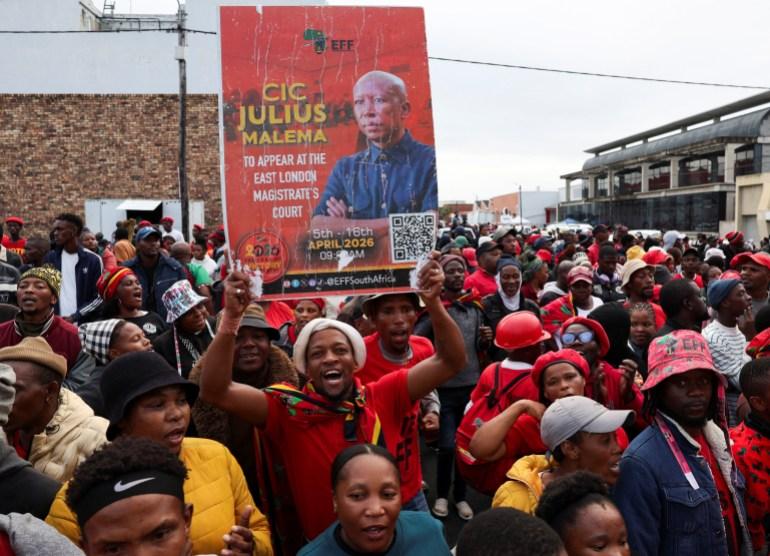
Malema’s sentencing places the EFF in a precarious position. If he serves time, the party risks losing momentum. Yet history shows imprisonment can sometimes strengthen political figures by casting them as martyrs. The EFF may use this narrative to galvanize support, particularly among younger voters and marginalized communities.
With national elections approaching, the case could reshape voter dynamics:
The judiciary’s decision will be seen as a test of whether South Africa can balance justice with political realities.
Malema’s case has reignited debate about firearm regulation. Civil society groups call for stricter enforcement, while others question whether laws are applied consistently across political and social groups. The case highlights the need for clarity and fairness in how firearm offenses are prosecuted.
South Africa has a long history of political leaders facing legal battles — from apartheid‑era trials to corruption cases in recent decades. These moments often shape public discourse and political trajectories. Malema’s case may join this list as a defining moment in the country’s democratic evolution.
Like Nelson Mandela’s imprisonment or Jacob Zuma’s corruption trials, Malema’s sentencing could either weaken his influence or elevate him as a symbol of resistance, depending on how the narrative unfolds.
South Africans remain divided:
The sentencing of Julius Malema is more than a legal matter — it is a political turning point. His appeal will determine whether he serves time or avoids imprisonment, but the broader implications extend far beyond his personal fate.
The case raises critical questions about accountability, justice, and the strength of South Africa’s democratic institutions. If handled transparently, it could reinforce public trust in the rule of law. If perceived as biased, it risks fueling unrest and deepening political polarization.
As the High Court prepares to rule, the nation watches closely, knowing the outcome could reshape South Africa’s political landscape for years to come.
Burundi’s ruling CNDD‑FDD nominates President Évariste Ndayishimiye for the 2027 election, sparking debate over governance, rights, and the nation’s future.
South Africa withdraws its draft AI policy after fake, AI‑generated citations are discovered, raising concerns about oversight, credibility, and future governance.
ZANU‑PF is pushing a controversial constitutional amendment in Zimbabwe to extend presidential powers and weaken direct voting rights. Public hearings have been marred by violence, intimidation, and bussing of supporters, raising fears of democratic backsliding.