Servier to Acquire Day One Biopharmaceuticals in $2.5 Billion Deal
Servier to acquire Day One Biopharmaceuticals in $2.5B deal, expanding its oncology portfolio and strengthening focus on rare and pediatric cancers.
Loading...


The U.S. Justice Department has announced a historic reclassification of marijuana, reshaping the $47 billion cannabis industry. Discover the economic, legal, and global impact of this landmark policy shift.
In a landmark move that could reshape the future of cannabis in America, the U.S. Department of Justice has announced plans to loosen federal restrictions on marijuana. This decision marks the most significant shift in national drug policy in decades, signaling a new era for the $47 billion cannabis industry.
For years, marijuana has been classified as a Schedule I drug, alongside heroin and LSD; under the Controlled Substances Act. That classification has long been criticized as outdated, given the widespread legalization of cannabis at the state level and growing evidence of its medical benefits. Now, with the federal government reclassifying marijuana into a less restrictive category, the industry is bracing for sweeping changes in economics, law, and public health.
Table of contents [Show]
Marijuana prohibition in the United States dates back to the early 20th century, when federal laws criminalized its use and distribution. The Controlled Substances Act of 1970 cemented marijuana’s status as a Schedule I drug, defined as having “no accepted medical use” and a high potential for abuse.
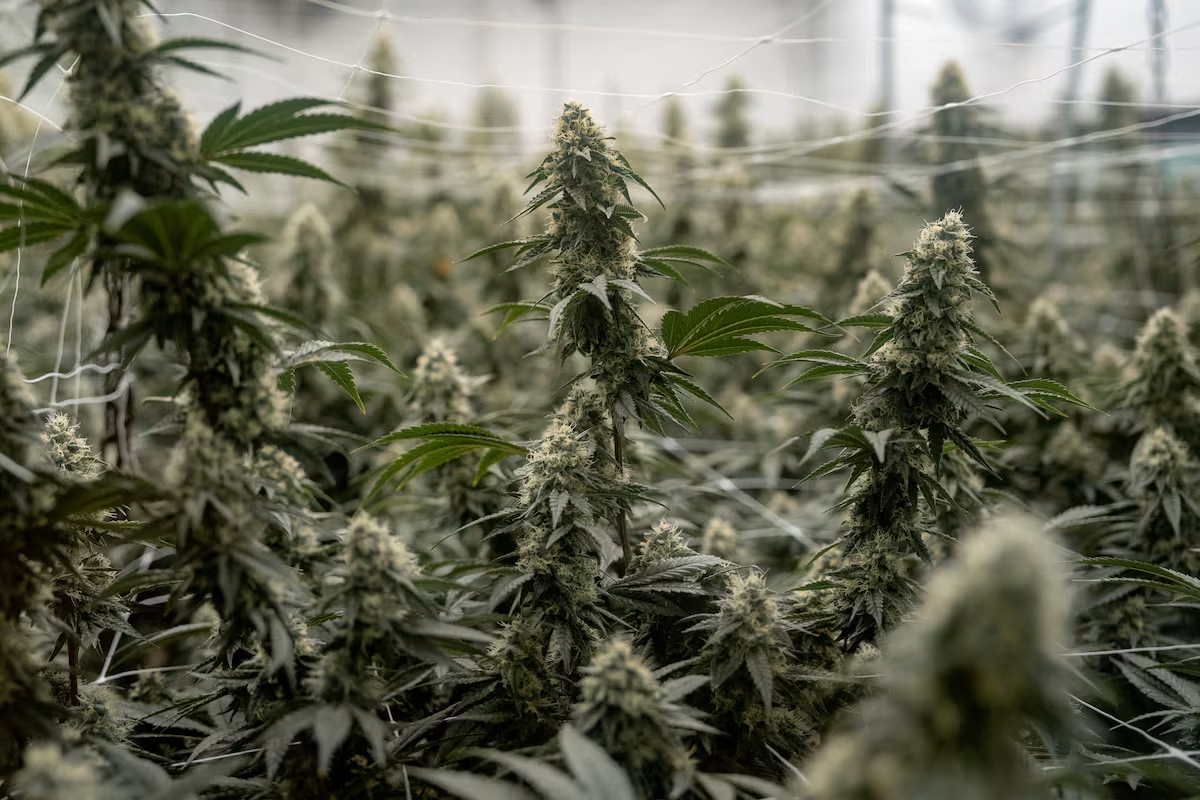
Despite this federal stance, states began charting their own course. California legalized medical marijuana in 1996, and Colorado and Washington became the first states to legalize recreational use in 2012. Today, more than 20 states allow recreational cannabis, and over 35 permit medical use.
Yet the federal classification created barriers:
This disconnect between state and federal law created a patchwork system that stifled growth and innovation.
The Department of Justice’s April 2026 announcement represents a turning point. Acting Attorney General Todd Blanche confirmed that marijuana will be moved from Schedule I to Schedule III, placing it alongside substances like ketamine and anabolic steroids.
This reclassification does not legalize marijuana outright but acknowledges its medical value and reduces restrictions on research and business operations. The move follows President Donald Trump’s December 2025 executive order directing federal agencies to review cannabis policy.

The market reaction was immediate. Cannabis stocks surged between 6% and 13% in the hours following the announcement, reflecting investor optimism about reduced tax burdens and expanded opportunities. While prices later stabilized, the industry’s outlook remains bullish.
The cannabis industry is currently valued at $47 billion, with projections suggesting it could surpass $70 billion by 2030. The DOJ’s decision could accelerate this growth by:
Companies like Canopy Growth, Tilray, and Trulieve stand to benefit, but smaller businesses may also thrive as barriers to entry decline.
Beyond economics, the policy shift carries profound social consequences.
The debate over recreational use continues, but the federal government’s acknowledgment of marijuana’s medical value marks a cultural milestone.
The U.S. decision will reverberate worldwide. Countries often look to American policy as a benchmark, and this shift could encourage others to reconsider their own cannabis laws.

In South Africa, private cannabis use is legal following a 2018 Constitutional Court ruling, but commercial regulation remains under debate. The U.S. move could inspire policymakers to accelerate frameworks for cultivation, export, and retail.
African nations with favorable climates may find opportunities in cannabis exports, particularly if global demand rises. This could create new revenue streams for economies seeking diversification.
Despite the optimism, challenges remain:
The path forward will require careful navigation of political, economic, and social landscapes.
The U.S. government’s decision to loosen marijuana rules marks a historic moment in drug policy. While not full legalization, the reclassification of cannabis represents a recognition of its medical potential and a step toward aligning federal law with state realities.
For the $47 billion cannabis industry, the announcement opens doors to growth, innovation, and legitimacy. For society, it raises questions about justice, health, and regulation. And for the world, it signals that the era of marijuana prohibition may be drawing to a close.
Road2Elections.com will continue to track this evolving story, offering insights into how policy shifts in the United States shape global trends.

Servier to acquire Day One Biopharmaceuticals in $2.5B deal, expanding its oncology portfolio and strengthening focus on rare and pediatric cancers.
Cognito raises $105M to advance FDA pivotal trial, expand Spectris neurotech platform, and target Alzheimer’s, Parkinson’s, and other CNS disorders.