Deadly Hantavirus Outbreak on MV Hondius Raises Global Health Concerns
Three dead and multiple ill after a hantavirus outbreak on MV Hondius cruise ship. WHO investigates transmission risks and global health implications.
Loading...

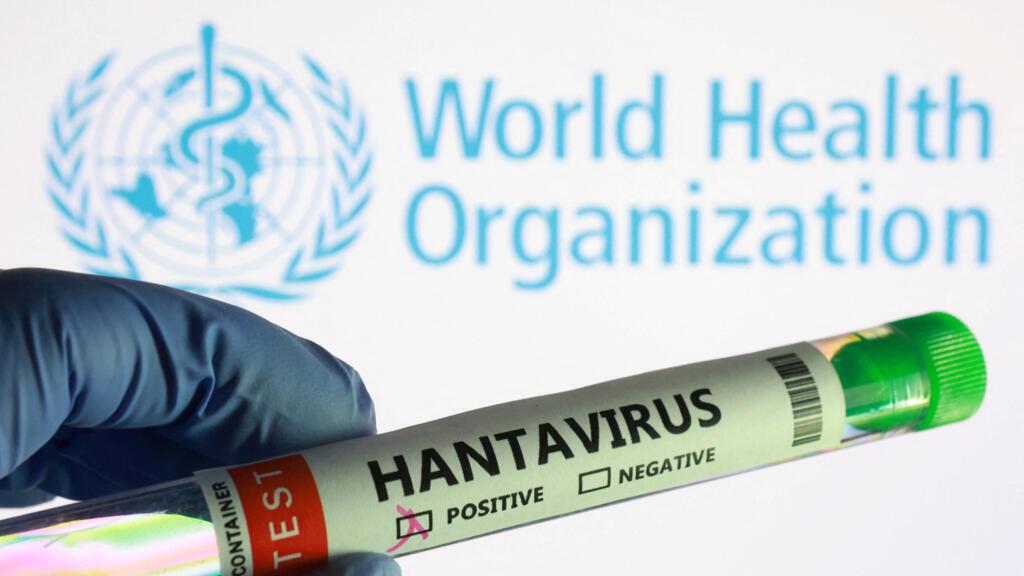
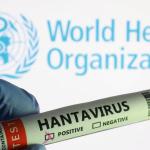
WHO says the deadly hantavirus outbreak on MV Hondius is not a pandemic, as global authorities trace passengers and contain the Andes virus across continents.
The World Health Organization has moved quickly to calm fears after a deadly outbreak of hantavirus aboard the Dutch cruise ship MV Hondius, insisting that the situation is not comparable to the early days of Covid‑19. At a briefing in Geneva, infectious disease expert Maria van Kerkhove stressed that hantavirus spreads through “close, intimate contact” and not through casual airborne transmission.
Her reassurance comes as health authorities across Europe, Africa, Asia, and the Americas scramble to trace passengers who disembarked from the vessel, which has already seen three deaths and five confirmed cases of the Andes strain of hantavirus. The outbreak is the first known transmission of the virus aboard a ship, and its unusual circumstances have raised urgent questions about containment, transparency, and international coordination.
Table of contents [Show]
The MV Hondius set sail from Ushuaia, Argentina, on 1 April, carrying around 150 passengers and crew from 28 countries. The voyage was meant to be a luxury expedition across the South Atlantic, ending in Spain’s Canary Islands on 10 May.
But by 11 April, tragedy struck. A 69‑year‑old Dutch man died on board. His body was later disembarked in St Helena on 24 April, along with his wife. Within days, she too fell ill and died in South Africa, with tests confirming hantavirus infection.
On 24 April, dozens of passengers left the ship in St Helena, including seven British nationals. This stopover became a critical turning point, as those who disembarked scattered across continents, complicating tracing efforts.
By 27 April, a British passenger had been evacuated to Johannesburg in critical condition. On 2 May, a German woman died on board, her body still on the vessel.
The first confirmed case was officially reported on 4 May, weeks after passengers had already dispersed. WHO announced that five of eight suspected cases had tested positive, and by then, three deaths were linked to the outbreak.
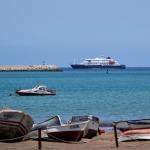
Now, as the ship sails toward Tenerife, Spain, with its scheduled arrival on 10 May, authorities are preparing quarantine and screening measures.
At Thursday’s briefing, van Kerkhove emphasized that this outbreak is not the start of a pandemic. “This is not Covid, this is not influenza, it spreads very, very differently,” she said. Passengers were instructed to wear masks, while caregivers were told to use higher‑level protective equipment.
WHO Director General Tedros Ghebreyesus added that the agency assessed the public health risk as “low.” He explained that the first confirmed cases had traveled through Argentina, Chile, and Uruguay on bird‑watching trips that exposed them to rodent habitats. Still, he warned that vigilance was essential, given the long incubation period and the possibility of more cases emerging.
The outbreak has triggered a complex web of tracing operations across multiple continents.
In the United Kingdom, two nationals are self‑isolating, four remain in St Helena, and one has yet to be located. Spain has been in advanced talks with London to arrange a repatriation flight once the ship arrives in Tenerife.
Spain’s civil protection chief Virginia Barcones confirmed that 19 British passengers and four crew members remain on board, alongside four Americans. The United States has expressed willingness to send a plane to collect its citizens directly. Meanwhile, the US Centers for Disease Control and Prevention (CDC) is monitoring three passengers who returned to Georgia and Arizona, though none have shown symptoms.
Singapore’s Communicable Diseases Agency reported isolating two men who had disembarked in St Helena and later flew to Johannesburg. They shared a flight with the Dutch woman who died, and their test results are pending.
Dutch authorities confirmed that the deceased woman boarded a KLM flight from Johannesburg to Amsterdam but fell ill before departure. Officials are contacting passengers from that flight, urging them to remain available for monitoring.
WHO noted that the first confirmed cases had traveled through Argentina, Chile, and Uruguay, visiting sites where rodents carrying the virus were present. Local health agencies have been alerted, though no secondary outbreaks have been reported.
Oceanwide Expeditions has faced criticism over its handling of the outbreak. The company said the first confirmed case was not reported until 4 May, weeks after passengers had already disembarked. Critics argue that the delay may have complicated tracing efforts, especially given the long incubation period.
The operator insists it has maintained “close and continual discussion with relevant authorities regarding our exact point of arrival, quarantine and screening procedures.” But passengers have expressed frustration at being confined on board, with some posting tearful videos describing fear and uncertainty.
The outbreak inevitably recalls the early days of Covid‑19, when cruise ships became notorious for spreading infections. WHO has been careful to stress that hantavirus is different, but the Hondius case highlights familiar challenges: confined environments, international coordination, and public communication.
The agency’s insistence that this is not a pandemic reflects lessons learned about managing fear and misinformation. Yet the Hondius outbreak shows how quickly a localized incident can become a global concern when international travel is involved.
Beyond statistics, the outbreak has left families grieving and survivors facing weeks of monitoring. The deaths of the Dutch couple and the German woman have shocked fellow passengers, while those still on board live in an atmosphere of tension and uncertainty.
Videos posted by travel bloggers show passengers in tears, describing confinement and fear. For many, the experience has been a grim reminder of how vulnerable cruise ships remain to infectious disease outbreaks.
WHO has warned that more cases may emerge due to the long incubation period. Authorities in multiple countries are monitoring passengers, while Oceanwide Expeditions prepares for quarantine and screening in the Canary Islands.
Dr Tedros emphasized that vigilance is essential: “We are aware of reports of other people with symptoms who may have had contact with passengers. Officials are in touch with the relevant authorities.”
For now, the world watches as the MV Hondius sails toward Spain, carrying not just passengers but the weight of unanswered questions about how hantavirus spread, how many more may fall ill, and whether lessons from Covid‑19 are truly being applied.
Three dead and multiple ill after a hantavirus outbreak on MV Hondius cruise ship. WHO investigates transmission risks and global health implications.
The U.S. Justice Department has announced a historic reclassification of marijuana, reshaping the $47 billion cannabis industry. Discover the economic, legal, and global impact of this landmark policy shift.
Servier to acquire Day One Biopharmaceuticals in $2.5B deal, expanding its oncology portfolio and strengthening focus on rare and pediatric cancers.