As US and Israeli airplanes launched fresh rounds of strikes on the Islamic Republic on Wednesday, Iran substantially intensified its tactic of assaulting civilian infrastructure and transport networks throughout the Gulf, targeting Dubai's international airport and hitting commercial ships.
In a belligerent tone, senior Iranian officials warned of a protracted "war of attrition" that would threaten world economic instability as the region's energy supplies were cut off.
Violence persisted over much of the Middle East in what looks to be a worsening standoff in the 12-day battle, with Israeli strikes on what it claims are Hezbollah positions in Lebanon and barrages of Iranian missiles and Hezbollah rockets aimed at Israel.
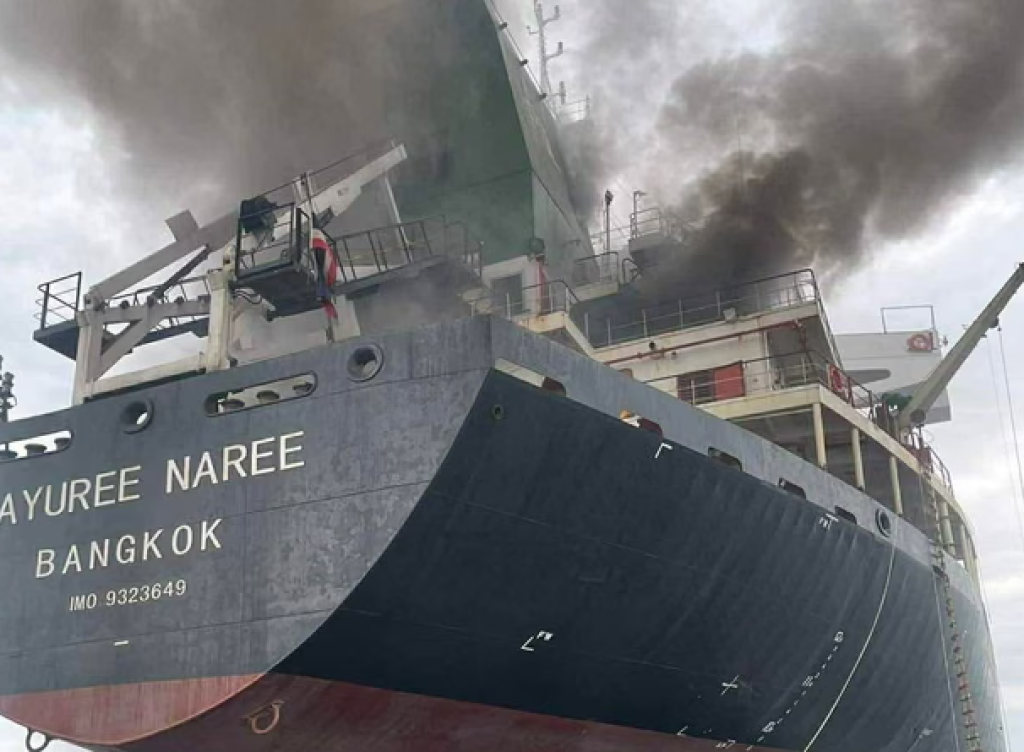
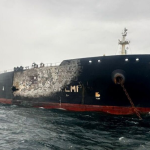
According to maritime authorities, three cargo ships were struck by "unknown projectiles" in the Strait of Hormuz; this is the most recent attack in the crucial oil corridor.
It happened on the same day that the International Energy Agency (IEA) declared that 32 nations had unanimously decided to release 400 million barrels of oil because of the "unprecedented" circumstances.
Since Israel and the US attacked Iran late last month, pressure has increased on the strait, one of the most vital maritime lanes in the world. As a result, traffic has decreased and global oil prices have skyrocketed.
Iran has declared that it will "not allow even a single litre of oil" to cross the strait on its way to the United States, Israel, and their allies.
According to US intelligence reports, Iran's direct attacks pose the biggest threat to oil tankers passing through the Strait of Hormuz, a crucial transit route for the world's oil traffic that the Islamic Revolutionary Guard has essentially blocked since the US-Israeli war against Iran began.
Fearing that Iran might be preparing to mine the strait, the Trump administration attacked sixteen mine-laying vessels close to the channel on Tuesday. In a video released by US Central Command, munitions were shown striking nine vessels, the majority of which were moored at the time.
Iran has declared that it will "not allow even a single litre of oil" to cross the strait on its way to the United States, Israel, and their allies.
In other news, Israel responded to rockets fired at Israel on Wednesday night by launching a new round of attacks targeting Hezbollah targets in Lebanon. Iran had earlier launched further retaliatory strikes throughout the Gulf.
When asked what it will take for the war to end in Iran, US President Donald Trump responded that "we're not finished yet" while speaking outside the White House.
Iran has taken responsibility, claiming that the crew of the ship disregarded alerts.
The second ship was a container ship flying the Japanese flag that was struck 25 nautical miles off the coast of the United Arab Emirates and only slightly damaged.
UK Maritime Trade Operations (UKMTO) reports that a third cargo ship was struck approximately 50 nautical miles northwest of Dubai.
"Get ready for the oil barrel to be at $200 because the oil price depends on the regional stability which you have destabalized," stated Ebrahim Zolfaqari, a spokesman for Tehran, after the attacks.
Since the start of the conflict, there have been thirteen alleged Iranian strikes on ships in the Gulf.
In a statement released on Wednesday, G7 leaders said they were attempting to "explore the possibility of escorting ships when the right security conditions are in place."
Civilians should avoid Iranian ports near the Strait of Hormuz, according to US Central Command, as Tehran was using these locations for military operations.
Oil prices continue to fluctuate; on Wednesday, they were about $92 per barrel after rising to nearly $120 on Monday and then down to $87 the same day.
On Wednesday, Trump referred to these swings as a "matter of war" before declaring that "oil prices are already coming back down".
In the past, he threatened Iran with extraordinary military repercussions if it mined the strait to prevent Gulf oil from going through, claiming that the US military could accompany ships.
According to Fatih Birol, executive director of the IEA, members decided on Wednesday to release 400 million barrels of oil in order to counteract the "effective closure" of the shipping channel, which typically transports 20% of the world's oil through the strait.
Since the United States and Israel started attacking Iran on February 28, shipping in the Gulf and along the narrow Strait of Hormuz, which carries about a fifth of the world's oil, has almost stopped. This has caused global oil prices to soar to levels not seen since 2022.
The Marshall Islands-flagged Safesea Vishnu and the Zefyros, which had loaded gasoline cargoes in Iraq, were the targets of late-night armed boat attacks in the Gulf close to Iraq, according to two Iraqi port authorities.
While Iraqi rescue crews searched for further missing sailors, one port security official reported, "We recovered the body of a foreign crew member from the water." Which ship that individual was associated with was not readily apparent.
According to two maritime security firms, an unidentified projectile 25 nautical miles (46 km) northwest of Ras Al Khaimah in the United Arab Emirates caused minor damage to the Japanese-flagged container ship ONE Majesty on Wednesday.
A representative for Ocean Network Express, its charterer, stated that the ship was hit while at anchor in the Gulf and that an examination of the hull showed little damage above the waterline. Its Japanese owner, Mitsui O.S.K. Lines (9104.T), opens a new tab.
They added that the ship is still completely functional and seaworthy and that all crew members are safe. According to the owner, the incident's cause is yet unknown and is being looked into.
The Marshall Islands-flagged Star Gwyneth's hull was dented by the shot, according to maritime risk management firm Vanguard, but the crew was unharmed. According to Star Bulk Carriers, the ship was struck in the hold area while it was anchored. There was no listing and no crew injuries.
In their statement, the Guards mentioned another ship that was struck on Wednesday morning by missiles, which is typically a reference to drones.