Julius Malema Sentenced to Five Years: What It Means for South Africa
Julius Malema sentenced to five years for firearm offenses. His appeal could reshape South Africa’s politics, justice system, and democratic institutions.
Loading...

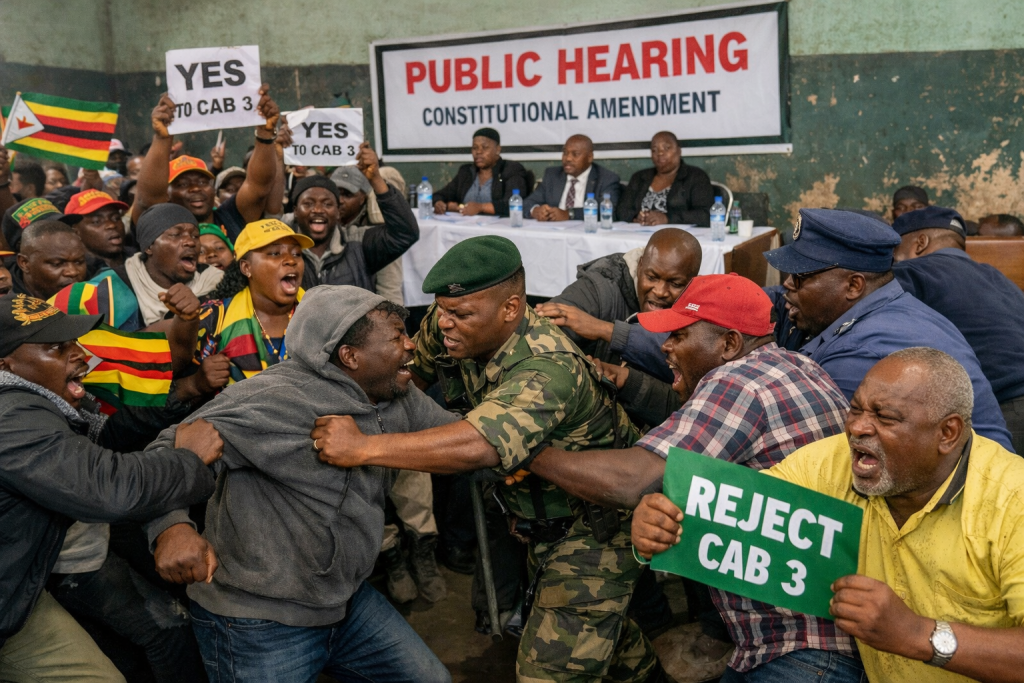
ZANU‑PF is pushing a controversial constitutional amendment in Zimbabwe to extend presidential powers and weaken direct voting rights. Public hearings have been marred by violence, intimidation, and bussing of supporters, raising fears of democratic backsliding.
Zimbabwe’s ruling party, ZANU‑PF, is advancing Constitutional Amendment Bill No. 3 (CAB3), a proposal critics describe as a “silent coup.” The amendment would extend President Emmerson Mnangagwa’s rule until 2030, remove direct presidential elections, and weaken independent institutions. Civil society, opposition parties, and international observers warn that the bill could dismantle democratic safeguards and entrench authoritarianism.
Table of contents [Show]
Reports from Chitungwiza, Epworth, and other towns reveal hearings dominated by bussed‑in ZANU‑PF supporters. Opposition voices were heckled, beaten, or forced out. Civil society groups described the process as “a mockery of public participation.”
International organisations are watching closely:
ZANU‑PF has repeatedly used constitutional amendments to consolidate power. In 2021, the party removed the running‑mate clause, allowing the president to appoint vice presidents directly. CAB3 continues this trend, further eroding checks and balances.
Groups like Amnesty International, Human Rights Watch, and Transparency International will likely highlight:
Zimbabwe is not alone in facing constitutional manipulation:
CAB3 fits into this broader pattern of African leaders reshaping constitutions to entrench power, raising alarms about democratic regression across the continent.
CAB3 is not just about extending Mnangagwa’s rule; it is about redefining Zimbabwe’s political system. If passed, it could:
Zimbabwe’s proposed amendment represents a turning point. For citizens, it threatens the essence of democracy. For international organisations, it raises alarms about governance, human rights, and regional stability. Whether CAB3 passes or is resisted will shape Zimbabwe’s political trajectory; and the lives of millions; for years to come.
Julius Malema sentenced to five years for firearm offenses. His appeal could reshape South Africa’s politics, justice system, and democratic institutions.
Pope Leo XIV rebukes Trump’s criticism, insisting the Church’s mission is peace. Vatican calls for reconciliation amid U.S.–Iran conflict tensions.
Hungary ends Viktor Orbán’s 16‑year rule as Páv Magyar wins landslide, pledging reforms and closer EU ties in a historic pro‑European shift.