South Asia is facing one of its most serious crises in years after Pakistan’s Defense Minister Khawaja Mohammad Asif declared that the country was now in an “open war” with Afghanistan. The announcement followed a series of fierce clashes along the Durand Line, the disputed 2,600‑kilometer border separating the two nations.
What began as sporadic skirmishes has spiraled into airstrikes, ground assaults, and competing claims of heavy casualties. For a region already strained by instability in neighboring Iran, the sudden outbreak of open hostilities raises fears of a wider conflict with global repercussions.
Background: A Fragile Relationship
Pakistan and Afghanistan share deep historical, ethnic, and political ties, but their relationship has long been fraught with mistrust. After NATO’s withdrawal from Afghanistan in 2021, Islamabad initially hoped the Taliban’s return to power would stabilize its western frontier. Instead, Pakistani officials accuse the Taliban of harboring militants from the Tehrik‑i‑Taliban Pakistan (TTP), who conduct cross‑border attacks.
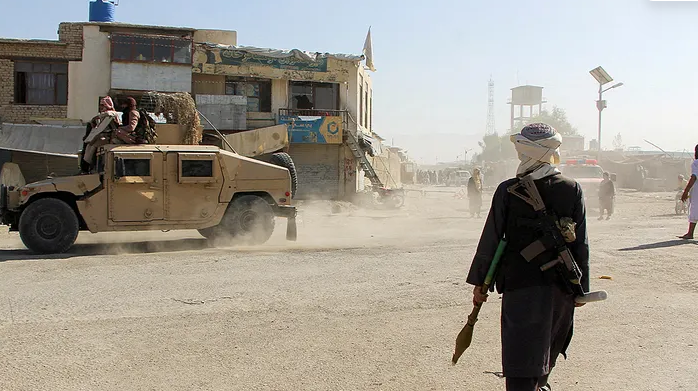
The Taliban deny hosting the group and accuse Pakistan of shifting blame for its own domestic security challenges. Yet even Afghan officials privately acknowledge that TTP fighters operate freely inside Afghanistan.
Border tensions have flared repeatedly in recent years, with both sides trading accusations of unprovoked fire. A ceasefire reached in 2025 offered temporary relief, but the fragile truce collapsed under the weight of repeated skirmishes. The latest clashes, involving Afghan ground assaults and Pakistani airstrikes, represent a dangerous escalation that could destabilize the entire region.
The Escalation
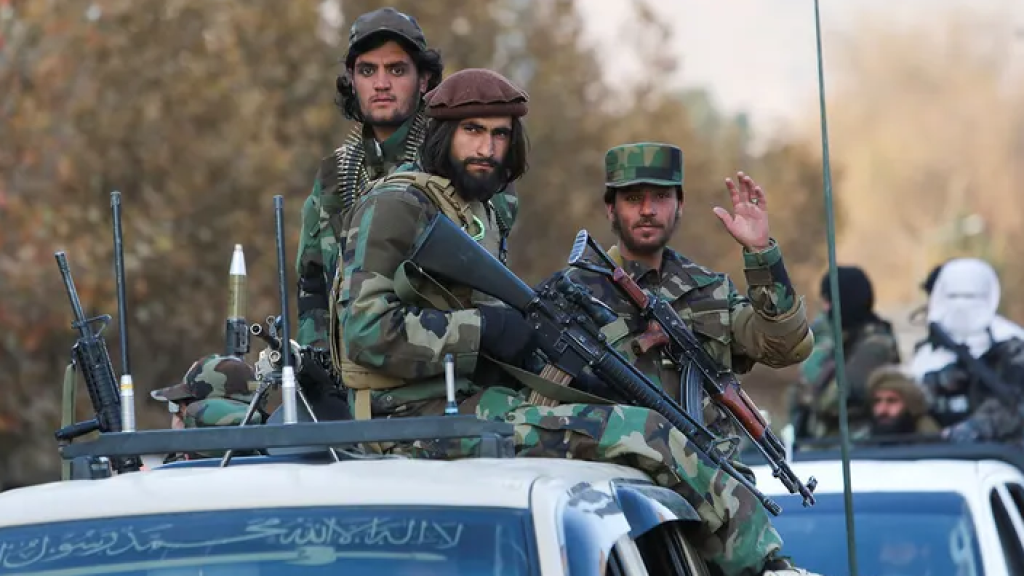
On Thursday, gunfire erupted along the border, quickly escalating into a broader confrontation. Afghan troops stormed dozens of Pakistani border positions, while Pakistan responded with a wave of airstrikes targeting major cities and military hubs.
Lt. Gen. Ahmed Sharif Chaudhry, Pakistan’s military spokesperson, confirmed that strikes extended across four border provinces and into Kandahar, home to Taliban leader Sheikh Haibatullah Akhundzada. Kabul, a city of six million, was also affected.
Hours after Afghan troops attacked more than 50 Pakistani border outposts, Pakistan launched strikes on more than 20 areas. Afghan officials described their actions as retaliation for earlier Pakistani bombings that reportedly killed at least 18 people.
Taliban spokesman Zabiullah Mujahid insisted that Afghanistan’s operations were defensive: “Our operation last night was a retaliatory operation and a response to Pakistan’s operation, not an attack to start a war against Pakistan.”
Military Dynamics
The fighting showcased the strengths of both militaries. Afghanistan relied on ground assaults, a tactic honed during its 20‑year insurgency against U.S. and NATO forces. Pakistan, by contrast, deployed overwhelming air power, striking ammunition dumps and military installations.
Reports indicated that Pakistan shot down multiple Taliban quadcopters, while Afghan officials claimed to have used “specialized laser units” in night operations. These claims highlight the evolving technological dimension of the conflict.
Analyst Ibraheem Bahiss of the International Crisis Group noted: “The Pakistanis have responded by using overwhelming force, and that escalates the ladder from Kabul’s perspective, which looks at how to respond better. The two sides keep doing what they think are measured responses, but they continue to raise the stakes.”
Regional and Global Reactions
The escalation has alarmed neighboring countries and global powers. China and Russia have pressured the Taliban to rein in militant groups operating in Afghanistan. China maintains diplomatic relations with the Taliban government, while Russia became the first nation to formally recognize the Taliban as Afghanistan’s legitimate rulers in 2025.
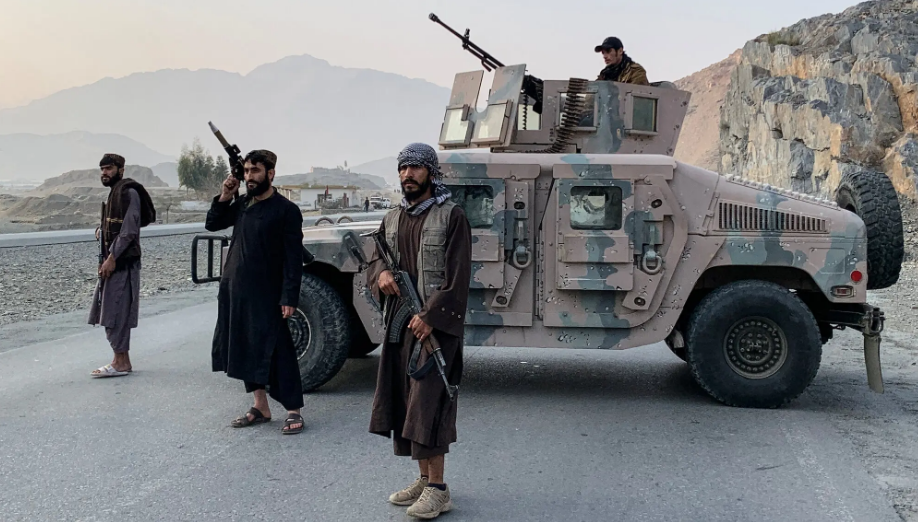
The United Nations Security Council recently reported that the Taliban government had supplied firearms and drones to the Pakistani Taliban. The same report noted that Al Qaeda “continued to enjoy the patronage of the de facto authorities,” raising concerns about Afghanistan’s role as a safe haven for extremist groups.
Regional fears are compounded by uncertainty over U.S. military operations in Iran, which could further destabilize trade and human mobility across South Asia.
Human Impact
Beyond military maneuvers, civilians are bearing the brunt of the conflict. Residents in Pakistani border districts report that local communities have taken up arms alongside security forces. Murtaza Shah, a teacher in the Kurram district, explained: “Some villagers have taken up positions alongside security forces in the trenches and are participating in the exchanges of fire. This is a crucial moment. Just as communities across the border are supporting Taliban fighters, we must stand with our forces.”
In Kabul, witnesses described destroyed ammunition dumps and damage to infrastructure. The humanitarian toll remains unclear, but early reports suggest significant casualties on both sides.
Historical Context
The Durand Line has been a flashpoint since its creation in 1893, dividing Pashtun communities across Pakistan and Afghanistan. For decades, both governments have struggled to manage cross‑border ethnic ties, smuggling, and militant movements.
The current escalation echoes past confrontations but is more dangerous given the Taliban’s control of Afghanistan and Pakistan’s willingness to use air power against major cities.
Pakistan’s declaration of “open war” against Afghanistan marks a turning point in South Asia’s security landscape. While both sides insist their actions are defensive, the cycle of retaliation risks spiraling into prolonged conflict.
For Pakistan, the challenge lies in securing its border while managing domestic security threats. For Afghanistan, the test is whether the Taliban can balance nationalist rhetoric with the need to maintain international legitimacy.
The broader region — from China and Russia to the United Nations — is watching closely. With militant groups emboldened and civilians caught in the crossfire, the stakes could not be higher. The fragile peace of recent years has shattered, leaving South Asia at a crossroads between escalation and diplomacy.