ZANU‑PF’s Push to Extend Presidential Powers Raises Alarm in Zimbabwe
Zimbabwe’s ruling party, ZANU‑PF, is advancing a constitutional amendment that critics say will entrench President Emmerson Mnangagwa’s rule until 2030, dismantle democratic safeguards, and strip citizens of their right to directly elect their leader. The proposed Constitutional Amendment Bill No. 3 (CAB3) has ignited widespread concern among civil society, opposition parties, and international observers.
What the Amendment Proposes
Extended Presidential Terms: Current limits of two five‑year terms would be altered, allowing Mnangagwa to remain in office beyond 2028.
Removal of Direct Elections: Citizens would lose the right to vote directly for the president, with power shifting to party‑controlled structures.
Weakening of Independent Institutions: Democratic commissions safeguarding transparency and accountability would be dismantled.
Public Hearings Marred by Violence
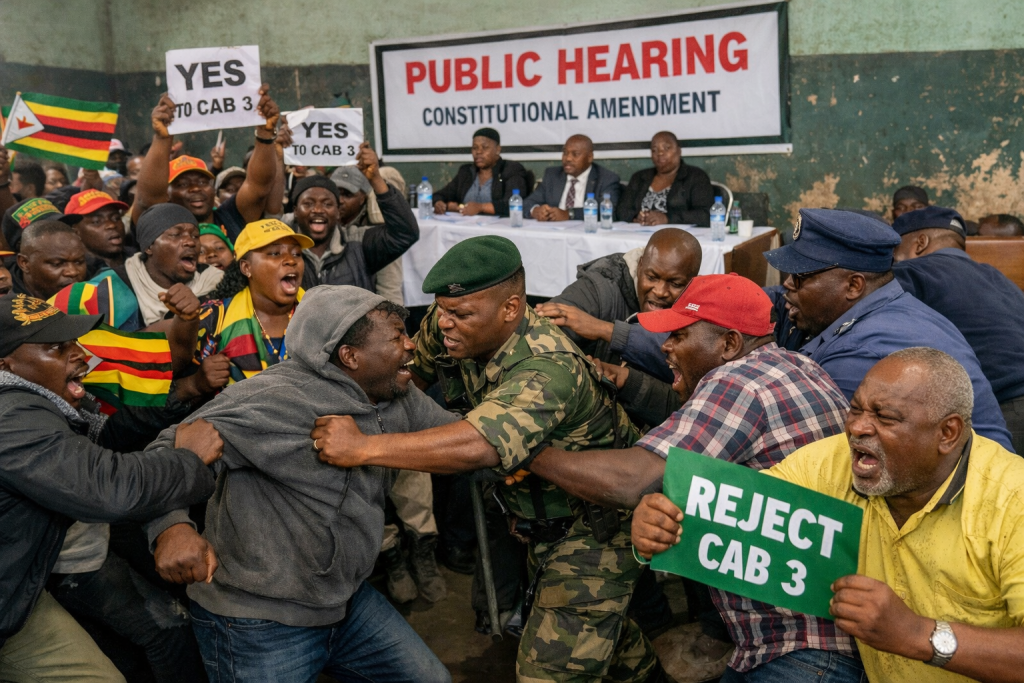
Public hearings meant to gather citizen input have been anything but democratic. Reports from Chitungwiza, Epworth, and other towns reveal:
• Bussed‑in ZANU‑PF supporters dominating proceedings.
• Intimidation and violence against those opposing the bill.
• Silencing of dissent, with opposition voices heckled, beaten, or forced out.
Opposition parties have condemned the hearings as a sham, withdrawing participation after repeated incidents of orchestrated violence.
Regional & Global Reactions
Civil society groups have labeled the amendment a “silent coup”, warning it undermines Zimbabwe’s fragile democracy. Opposition leaders are calling for independent consultations outside state‑controlled hearings. International observers fear the country is sliding deeper into authoritarianism, risking renewed sanctions and isolation.
The amendment represents more than a legal change; it is a direct assault on the principle of “one person, one vote.” By consolidating power in the presidency and suppressing dissent, ZANU‑PF is reshaping Zimbabwe’s political landscape in ways that could reverberate for decades.
ZANU‑PF’s constitutional amendment is not just about extending presidential terms; it is about redefining the balance of power in Zimbabwe. With public hearings marred by violence and manipulation, the process has already eroded trust in democratic institutions. For many Zimbabweans, the fight is no longer about one bill — it is about preserving the very essence of democracy.
Over the past decade, ZANU‑PF has repeatedly used constitutional amendments to tighten its grip on power. In 2021, the party removed the running‑mate clause, allowing the president to appoint vice presidents directly; a move critics said undermined accountability. CAB3 continues this trend, extending presidential authority while weakening checks and balances. Civil society groups have condemned the process.
The Zimbabwe Human Rights NGO Forum described the hearings as “a mockery of public participation,” while the Crisis in Zimbabwe Coalition urged Parliament to halt the bill until genuine consultations occur. These organizations argue that democracy cannot thrive when citizens are silenced through fear and coercion.