Julius Malema Sentenced to Five Years: What It Means for South Africa
Julius Malema sentenced to five years for firearm offenses. His appeal could reshape South Africa’s politics, justice system, and democratic institutions.
Loading...

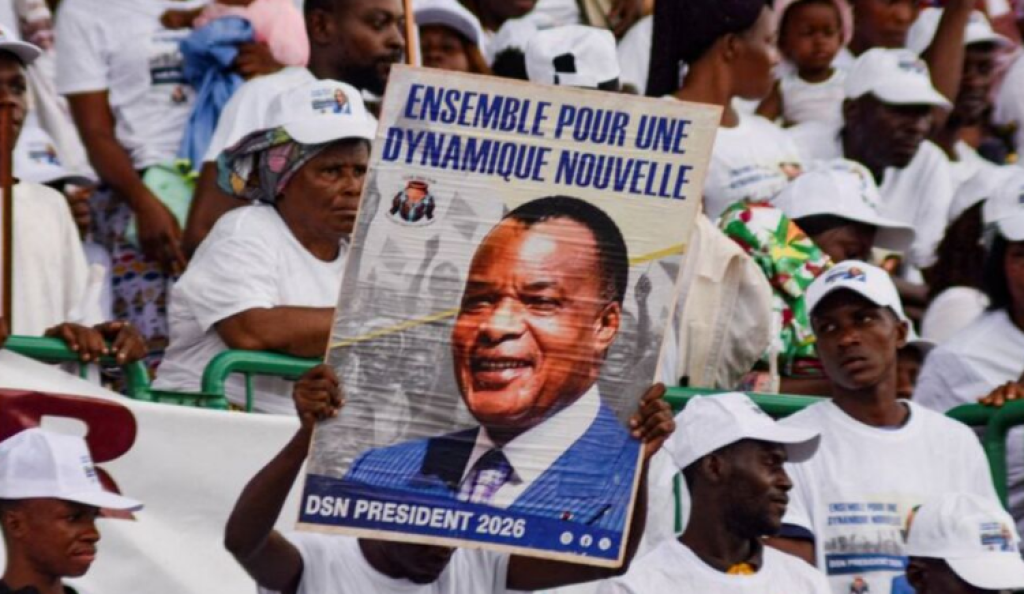
Congo votes in a presidential election expected to extend Denis Sassou Nguesso’s rule, as opposition boycotts and voter apathy raise questions of legitimacy.
On Sunday, voters in the Republic of Congo head to the polls in a presidential election widely expected to extend the decades‑long rule of Denis Sassou Nguesso. At 82, Sassou has governed the oil‑rich Central African nation for all but five years since 1979. With major opposition parties boycotting the vote and leading rivals imprisoned, the contest is seen less as a competitive race than as a test of citizen participation in a climate of repression and apathy.
Table of contents [Show]
Sassou Nguesso first rose to power in 1979 and returned after the civil war in 1997, consolidating control through the Congolese Labour Party (PCT). Since then, the ruling party has dominated state institutions, from the courts and security services to electoral bodies. Analysts note that Sassou’s political machinery relies heavily on clientelist networks that extend across social strata, ensuring loyalty and minimizing dissent.
The opposition enters this election fragmented and weakened. Two of its most prominent figures, General Jean‑Marie Michel Mokoko and André Okombi Salissa, have been imprisoned for nearly a decade after convictions on charges of undermining national security. Other historical figures such as Claudine Munari, Cléo Miérassa, and Mathias Dzon have failed to build a unified coalition.
Officially, six lesser‑known candidates are on the ballot: Destin Melaine Gavet Elengo, Dave Uphreim Mafoula, Joseph Kignoumbi Kia Mboungou, Nganguia Engambe‑Anguios, Vivien Romain Manangou, and Mabio Mavoungou Zinga. Yet without the backing of major parties, their campaigns are unlikely to pose a serious challenge.
Parliamentary opposition groups, including the Union of Democrats and Humanists‑Yuki (UDH‑YUKI) and the Panafrican Union for Social Democracy (UPADS), have called for a boycott. They cite concerns over electoral governance, the accuracy of the voter registry, and the neutrality of the Independent National Electoral Commission. Rights organisations have documented arrests of activists, suspensions of opposition parties, and surveillance of public gatherings, describing the atmosphere as one of intimidation.
Human rights campaigner Joe Washington Ebina warned that recent crackdowns, including deadly operations against youth gangs known locally as “bébés noirs,” have heightened fear. “People no longer feel safe leaving their homes and expressing themselves,” he said.
More than 3.2 million Congolese are eligible to vote, but many say they will abstain. “I would rather stay at home than go and vote,” said Boudibangoyi Brunel, a student in Brazzaville. Civil society groups expect turnout to be lower than the official 68 percent reported in 2021, arguing that real abstention rates will be “extremely high.”
Afrobarometer surveys conducted in 2023 and 2024 found that 41.6 percent of respondents did not vote, citing reasons ranging from lack of registration to apathy and distrust in electoral institutions. Analysts warn that disengagement among young people, who are eager for change, further undermines the credibility of the process.
The credibility of the election hinges on turnout. Official figures from the Ministry of the Interior often clash with reports from civil society and opposition groups, fueling debates about transparency. While Sassou Nguesso is expected to secure victory in the first round, the absence of a serious rival and widespread abstention may deepen perceptions of illegitimacy.
Political scientist Etanislas Ngodi describes the race as one defined by “a well‑organised majority, a disorganised opposition, and a contracting civic space.” Even within losing parties, questions of fairness and inclusivity are likely to spark disputes after the vote.
The Republic of Congo’s 2026 presidential election is less about competition than about control. With Sassou Nguesso’s dominance assured, the real measure of legitimacy will be whether citizens turn out to vote in meaningful numbers. For many Congolese, however, repression, apathy, and distrust have already eroded faith in the ballot box. The outcome may reinforce Sassou’s grip on power, but it risks leaving the country more divided and its democracy further weakened.
Julius Malema sentenced to five years for firearm offenses. His appeal could reshape South Africa’s politics, justice system, and democratic institutions.
Hungary ends Viktor Orbán’s 16‑year rule as Páv Magyar wins landslide, pledging reforms and closer EU ties in a historic pro‑European shift.
ZANU‑PF is pushing a controversial constitutional amendment in Zimbabwe to extend presidential powers and weaken direct voting rights. Public hearings have been marred by violence, intimidation, and bussing of supporters, raising fears of democratic backsliding.