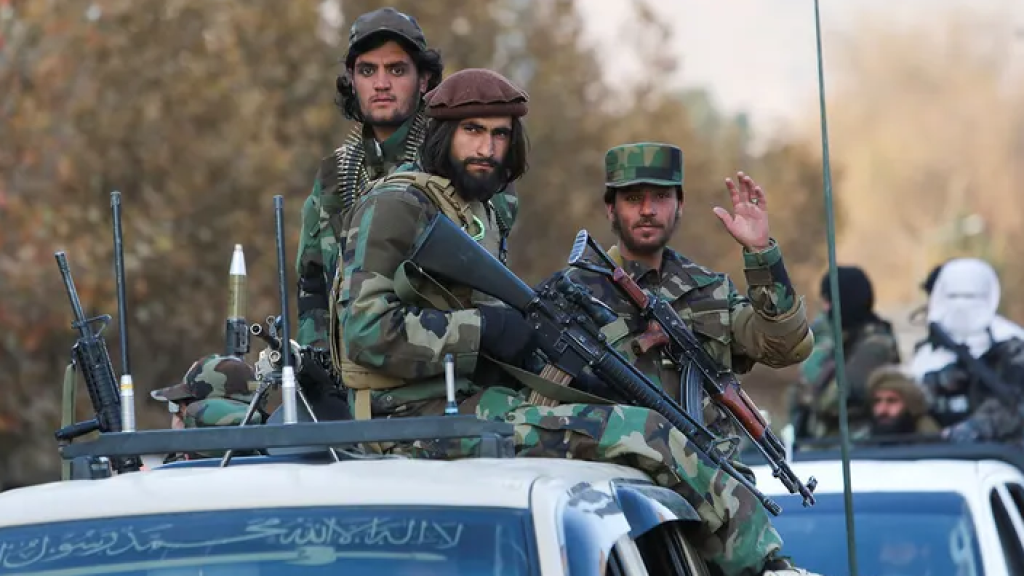
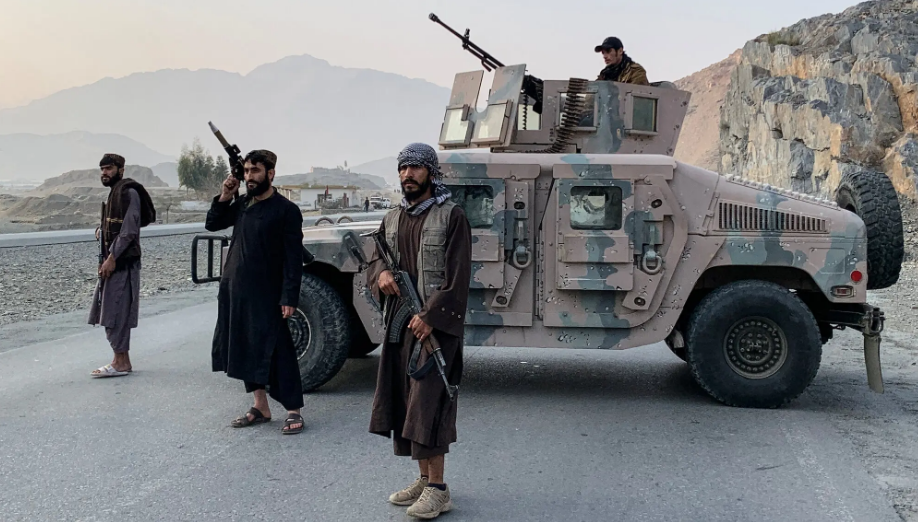
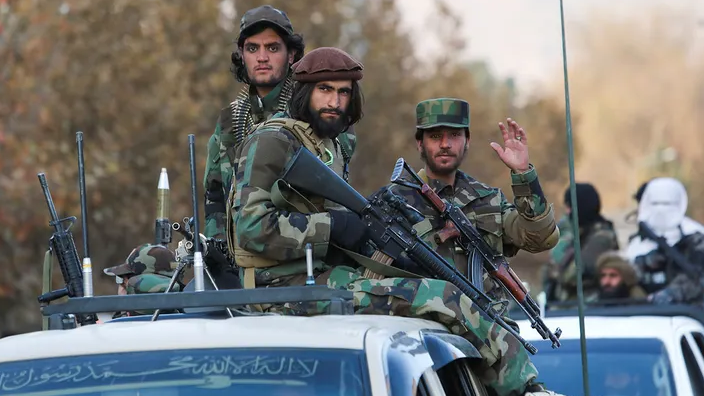
In reaction to the Taliban's retaliatory attacks, Pakistan declares "open war" on Afghanistan, saying, "Our patience has now run out." Pakistan's Defense Minister Khawaja Mohammad Asif declared on X that "it is now open war between us."
According to several accounts, Pakistan's defense minister declared a "open war" with Afghanistan on Friday following intense gunfire between the two countries along their shared border on Thursday.
In a post on X, Defense Minister Khawaja Mohammad Asif said that although Pakistan had thought the Taliban would deliver stability following NATO's withdrawal, the group was instead accused of transforming Afghanistan "into a colony of India" and "exporting terrorism."We are now at the end of our patience. We are at open war right now," he declared.
Islamabad claimed it was responding to unprovoked firing in the region, while the Taliban claimed it had launched retaliation strikes on Pakistani military installations, which sparked the hostilities.
Officials from both countries said that Pakistan and Afghanistan clashed fiercely Friday, turning months of tension and border skirmishes into an outright war. Afghan troops stormed dozens of Pakistani border positions and Pakistan responded with a wave of airstrikes targeting major cities and military hubs.
According to Lt. Gen. Ahmed Sharif Chaudhry, the Pakistani military spokesperson, the attacks also affected four border provinces and the southern city of Kandahar, which is home to Sheikh Haibatullah Akhundzada, the supreme leader of the Taliban. Kabul is home to six million people.
During a news briefing on Friday, General Sharif stated, "That's what has been done so far." "This is still going on."
Hours after Afghan troops attacked more than 50 Pakistani border outposts, Pakistan fired attacks on more than 20 areas, according to General Sharif. Afghan officials said the attack was a response to strikes earlier in the week by Pakistan.
At a news conference in Kandahar on Friday, Taliban spokesman Zabiullah Mujahid stated, "Our operation last night was a retaliatory operation and a response to Pakistan's operation, not an attack to start a war against Pakistan."
According to Reuters, both armies engaged in combat for about two hours along their roughly 2,600-kilometer (1,615-mile) border, endangering a ceasefire that had been reached in 2025 following hostilities.
The flare-up on Thursday followed earlier this week's bombings by Pakistani forces inside Afghanistan, which Taliban authorities said killed at least 18 people, according to Reuters on February 24.
Pakistan denied allegations that civilians were targeted and stated that it targeted the hideouts of militants.
The Taliban responded to the strikes with a description of an "extensive" military campaign against Pakistani government installations.
Taliban spokesperson Zabihullah Mujahid stated on X, "Extensive preemptive operations have been launched against Pakistani military positions along the Durand Line in response to repeated provocations."
He claimed that "specialized laser units" were in operation at night in a different statement.
Since then, Pakistan has denied the Taliban's story.
The "immediate and effective response" to the Afghanistan Taliban's "unprovoked action along the Pakistan-Afghanistan border" was announced on X by the Ministry of Information and Broadcasting.
"Early reports confirm heavy casualties on the Afghan side with multiple posts and equipment destroyed," claimed the government. Pakistan would take all necessary steps to protect its citizens' safety and security as well as the integrity of its territory."
Reuters was also informed by Pakistani security sources that multiple quadcopters were shot down and that 22 Taliban personnel had been killed.
"Early reports confirm heavy casualties on the Afghan side with multiple posts and equipment destroyed," stated the administration. Pakistan would take all necessary measures to safeguard both the integrity of its territory and the safety and security of its inhabitants."
Pakistani security sources also told Reuters that 22 Taliban personnel had been killed and that several quadcopters had been shot down.
The conflict adds another layer of uncertainty to an already tense situation as both nations have been preparing for the potential effects of U.S. military strikes in neighboring Iran on trade and human mobility.
An Afghan military official who arrived at the scene soon after claimed that at least one ammunition dump in Kabul had been destroyed. He spoke under condition of anonymity because he was not permitted to discuss the fighting in public.
The battles demonstrated what both nations' armies are known for: Afghanistan's ground assaults and Pakistan's air power. During their 20-year insurgency against the U.S.-led coalition, the Taliban established and perfected ground attacks on isolated military outposts, according to Ibraheem Bahiss, an International Crisis Group analyst on Afghanistan.
According to Mr. Bahiss, "the Pakistanis have responded by using overwhelming force, and that escalates the ladder from Kabul's perspective, which looks at how to respond better."
Mr. Bahiss continued, "The two sides keep doing what they think are measured responses." "But they continue to raise the stakes."
The Pakistani Taliban are able to train and operate freely in Afghanistan, according to Pakistan, and then conduct strikes across the 1,600-mile mountainous border.
In addition to accusing Pakistan's government of attempting to shift responsibility for its own domestic security shortcomings, the Taliban deny hosting the group. However, Afghan officials admit, at least in secret, that the Pakistani Taliban are present in Afghanistan.
Countries around the area and beyond have been disturbed by the existence of the Pakistani Taliban and the revival of other organizations in Afghanistan, such as Al Qaeda.
China and Russia have put pressure on the Afghan government to control militant organizations that operate there. China and the Taliban government in Afghanistan have maintained diplomatic relations, and Russia was the first nation to acknowledge the Taliban as the legitimate government of Afghanistan last year.
The U.N. Security Council claims that the Afghan government has given firearms and drones to the Pakistani Taliban. In a report released last month, the UN also mentioned that "Al Qaeda continued to enjoy the patronage of the de facto authorities," which refers to the Taliban-led government in Afghanistan.
In certain Pakistani border districts, local officials have urged locals to back security forces, according to residents, as long-standing, cross-border ethnic and familial relationships have deteriorated in recent months.
According to Murtaza Shah, a teacher in the Kurram border district, "some villagers have taken up positions alongside security forces in the trenches and are participating in the exchanges of fire." "This is a crucial moment," he continued. “Just as communities across the border are supporting Taliban fighters, we must stand with our forces.”
ZANU‑PF is pushing a controversial constitutional amendment in Zimbabwe to extend presidential powers and weaken direct voting rights. Public hearings have been marred by violence, intimidation, and bussing of supporters, raising fears of democratic backsliding.
Iran confirms the death of security head Larijani, with the Supreme National Security Council announcing that Ali Larijani was killed in an Israeli airstrike alongside his son Morteza Larijani, the head of his office Alireza Bayat, and several guards.
Iran has named Mojtaba Khamenei as its new supreme leader, roughly a week after his father, Ayatollah Ali Khamenei, was assassinated in a combined US-Israeli operation that sparked a regional crisis